



This Content Is Only For Subscribers
Africa’s Energy and Insurance Recalibration: Strategic Intelligence on Strait of Hormuz Closure
The world’s most critical energy chokepoint closed on March 2, 2026, when the Islamic Revolutionary Guard Corps shut the Strait of Hormuz following military strikes on Iranian infrastructure. Protection and indemnity insurance was withdrawn from March 5, rendering the waterway commercially inoperable independent of military access. The strait normally handles roughly 20% of global seaborne oil trade, making this the first complete disruption of modern global energy infrastructure at this scale.
African energy markets face a dual transmission mechanism: direct pricing pressure from global supply disruption and structural cost increases from marine insurance recalibration. The impact materializes across three interconnected channels.
Energy Procurement Pressure
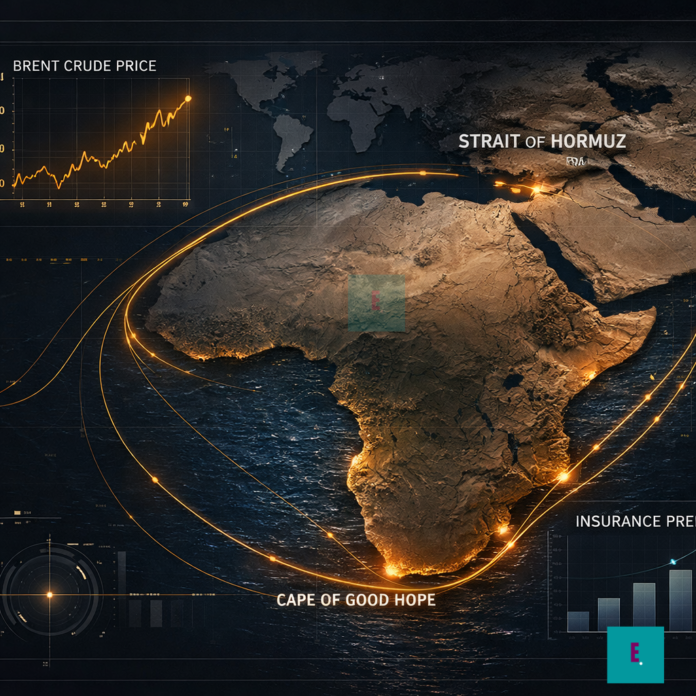
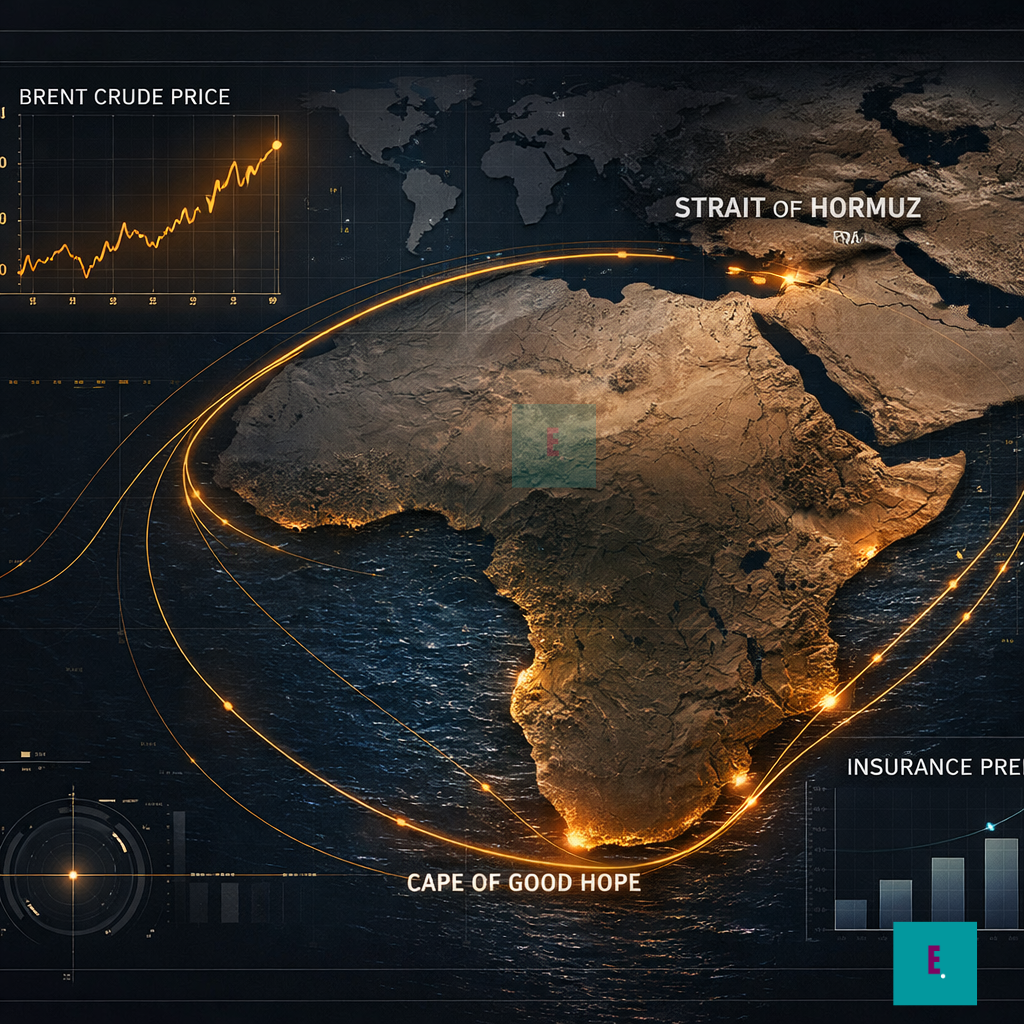
Energy costs have reset upward across the continent. Brent crude surpassed $100 per barrel on March 8 for the first time in four years, reaching $126 at peak. Gas produces 43% of Africa’s electricity, while oil-based generation contributes approximately 6-7% of the continent’s power supply. Import-dependent economies face global pricing without the strategic reserves or bilateral supply contracts that buffer major Asian buyers-China, India, Japan, and South Korea account for 69% of Hormuz crude flows.
The impact varies significantly across African markets. Net energy exporters (Nigeria, Angola, Algeria) face margin compression on crude exports while simultaneously benefiting from elevated Brent pricing-creating mixed fiscal outcomes. Import-dependent economies (Kenya, Ghana, South Africa) experience unidirectional cost pressure on fuel procurement and power generation. Landlocked markets (Zambia, Zimbabwe, Malawi) face compounded logistics costs as both maritime insurance and inland freight premiums escalate, creating double exposure to the disruption.
Marine Logistics Reconfiguration
Beyond energy pricing, physical routing economics have fundamentally shifted. Most shipping companies redirected traffic through the southern tip of Africa, with Cape routing adding 10-14 days transit time and $1 million fuel costs per voyage. This transforms African waters from alternative route to primary global shipping lane, creating both capacity constraints and concentration risk at South African ports and bunkering facilities.
Insurance Architecture Transformation
The financial architecture of marine risk has undergone structural repricing. War risk coverage costs surged to approximately 5% of ship value-five times initial conflict levels. Container operators introduced war risk surcharges ranging from $500 to $1,500 per twenty-foot equivalent unit. These costs flow directly to landed pricing for petroleum products, mining equipment, industrial machinery, and critical mineral processing infrastructure. African exporters of copper, cobalt, and agricultural commodities targeting Asian markets face identical insurance premium structures, compressing trade margins regardless of geographic distance from conflict zones.
Historical precedent offers limited guidance-no comparable closure has occurred in the modern integrated energy market. However, observable pricing behavior provides clarity on market expectations. Brent futures curves indicate traders are pricing sustained elevated levels rather than rapid mean reversion, while insurance premium structures suggest underwriters are modeling extended timelines.
The insurance withdrawal demonstrates structural market response. War risk coverage, which covers losses from conflict excluded from standard marine policies, became non-negotiable for commercial operations. Underwriters achieved effective closure through premium architecture independent of military blockade-a precedent with implications for future maritime chokepoint vulnerabilities affecting African trade corridors, including Red Sea and Suez Canal routes that have faced intermittent disruption.
Current routing patterns establish the new operational baseline. Cape of Good Hope traffic has absorbed diverted volume, but early capacity constraints are emerging at bunker fuel supply points and port anchorage zones. South African maritime infrastructure, designed for regional traffic volumes, now handles global throughput-creating potential bottlenecks that could compound transit delays beyond the baseline 10-14 day extension.
For Energy Procurement Teams
Stress-test operational budgets against sustained $90-110 Brent scenarios extending through Q4 2026. Evaluate term contract opportunities with Asian LNG suppliers seeking alternative outlet markets as traditional buyers reduce offtake. Diesel-dependent mining operations should model 15-20% fuel cost contingencies in production economics and revisit hedging strategies for six-to-twelve-month forward exposure. Consider accelerating fuel efficiency investments where capital is available, as payback periods have compressed under elevated pricing environments.
For Insurance and Reinsurance Executives
Recalibrate marine hull and cargo pricing models for sustained elevated war risk premiums extending beyond single policy periods. Monitor whether Lloyd’s market introduces Africa-specific route classifications that differentiate regional exposure from global blanket pricing. Evaluate whether South African water transit concentration creates new accumulation risk requiring capacity adjustments or coinsurance arrangements. Review force majeure clauses in existing policies covering energy import infrastructure and consider whether current language adequately addresses sustained chokepoint closure versus temporary disruption.
For Government Stakeholders
Currency reserve management becomes critical as fuel import bills rise while export revenues face margin compression from elevated shipping costs. Net energy exporters should evaluate whether to accelerate crude sales at elevated pricing to build foreign exchange buffers, while import-dependent economies must balance subsidy expenditure against inflation management. Consider whether strategic petroleum reserve establishment merits acceleration despite capital constraints-current pricing differentials may create favorable acquisition opportunities. Evaluate temporary tariff adjustments on fuel-intensive imports to protect foreign exchange positions without triggering inflationary spirals.
For Project Finance and Investors
For Project Finance and Investors
Incorporate 15-20% contingency factors for capital equipment imports in financial models for mining, energy infrastructure, and industrial projects. Reassess completion risk in projects dependent on Asian machinery suppliers, particularly for heavy equipment with long manufacturing lead times. For infrastructure debt, evaluate whether fuel cost pass-through mechanisms in power purchase agreements adequately cover sustained elevated feedstock pricing, or whether contract amendments are warranted. Mining project valuations should incorporate both elevated diesel costs and potential margin compression from increased concentrate shipping costs to Asian smelters.
FORWARD INDICATORS
Monitor three signals for strategic inflection points. First, Brent’s ability to establish a floor below $95 indicates whether market participants believe alternative supply routes can stabilize global balances. Second, watch whether war risk premiums begin differentiating between regional African shipping routes based on actual risk exposure rather than blanket global pricing-this would signal underwriter confidence in route-specific risk assessment. Third, track utilization rates at Cape anchorage zones and South African bunkering facilities, as capacity saturation would indicate infrastructure constraints becoming the binding constraint rather than insurance availability.
Conflict duration remains uncertain, but insurance market pricing architecture suggests underwriters are modeling extended timelines measured in quarters rather than immediate resolution. This pricing behavior-rather than public statements-provides the most reliable indicator of institutional expectations.